Florida might just be the most misunderstood place in America. Sure, it’s known for sunshine, beaches, Disney, and retirees playing shuffleboard—but it’s also the land of weird headlines, endless memes, and a reputation that often overshadows reality. For every postcard-perfect image of palm trees swaying in the breeze, there’s a half-truth, urban legend, or outright myth floating around about what life in the Sunshine State is really like.
Some of these misconceptions are harmless fun (looking at you, Florida Man), while others can leave visitors genuinely shocked when their expectations don’t match reality. And since Florida is a mix of paradise, chaos, and sheer unpredictability, it’s easy to see how these lies have stuck around.
So let’s set the record straight. Here are 10 big lies people believe about Florida—and the real truth behind them.
Florida Man Is a Real Person
We have to start with the internet’s favorite superhero: Florida Man. The myth, the legend, the walking headline. He’s the guy who steals an alligator from a golf course, tries to trade it for beer, then gets arrested the next day wearing a Spider-Man mask while robbing a Winn-Dixie.
The world has come to know “Florida Man” as one chaotic individual whose misadventures make Florida the strangest state in the country. And yes, the stories are hilarious. The idea that it’s all the same guy running from one bizarre incident to the next is comedy gold.
But here’s the truth: Florida Man isn’t real—it’s just a meme. What makes Florida different isn’t the level of weirdness—it’s the Sunshine Laws. These open-records laws make arrest reports and police records easily accessible to journalists. In most states, that bizarre story about a guy fighting a raccoon in a Taco Bell parking lot would never leave the courthouse files. In Florida, it’s a front-page headline before lunch.
So while Florida Man feels like one unhinged superhero, he’s really just a reflection of our transparent records—and a click-hungry media.
Key West Is the Southernmost Point of the U.S.
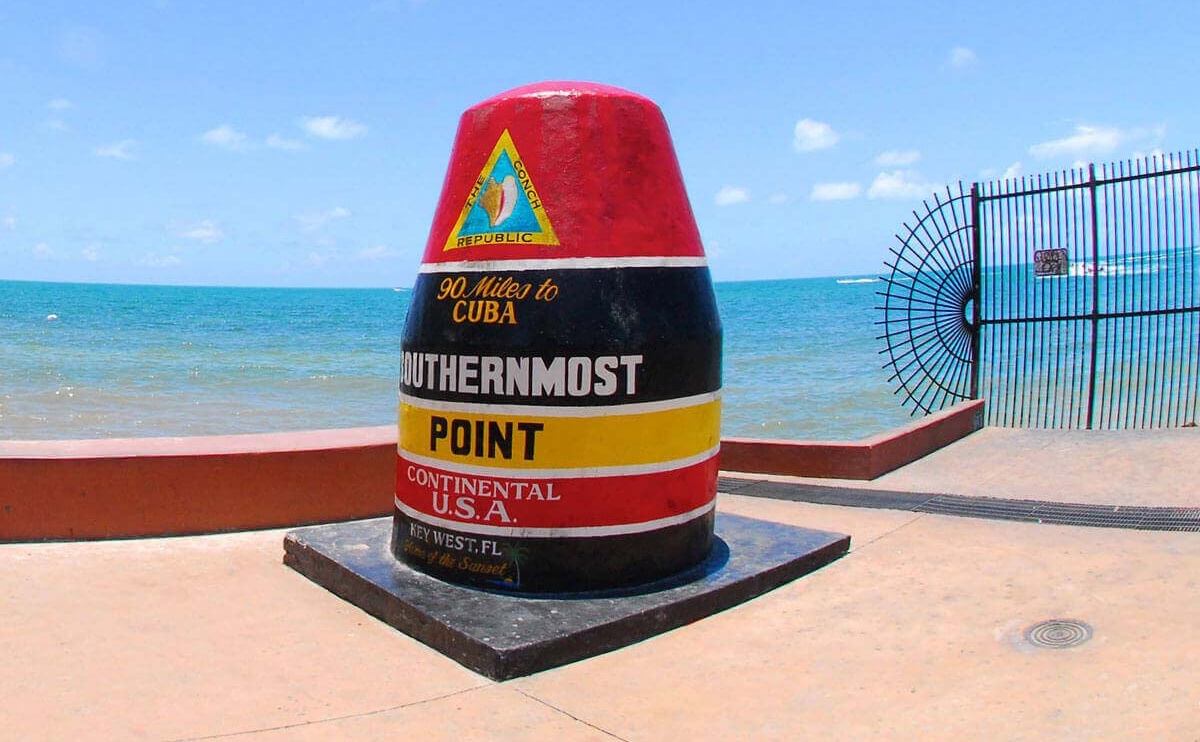
Sorry to break it to you: that brightly painted buoy in Key West? The one that proudly reads “Southernmost Point in the Continental U.S.” and attracts a line of tourists waiting for selfies? Yeah, it’s a lie.
For starters, it’s not even the southernmost point on Key West. The real tip of the island is inside a Navy base that’s off-limits to the public. The closest you can legally stand is at Fort Zachary Taylor Beach, part of the state park. And if you want to get picky, there’s private property at a hotel called Mansion by the Sea that sticks out even farther south.
Zoom out even more, and you’ll see that the actual southernmost point of the continental United States is Ballast Key,a small island about 10 miles west of Key West. And for the truly pedantic? The southernmost point of the mainland is Cape Sable, way out in the Everglades. No buoy there—just crocodiles, mangroves, and more mosquitoes than you thought possible.
So while the buoy is iconic, it’s also a little misleading. But hey, this is Florida—we specialize in quirky roadside attractions that play fast and loose with geography.
Alligators Are Everywhere and Constantly Eating People
If you’ve never been to Florida, you might think it’s basically Jurassic Park with gators hiding behind every bush, ready to lunge the second you step outside. Scroll through social media, and you’ll see outsiders commenting on kayaking photos with, “Are you insane?!”
Yes, there are a lot of alligators here—about 1.3 million statewide. But attacks are rare, and gators aren’t hunting humans. In fact, they’re usually shy and want nothing to do with you. Since 1948, there have been about 500 reported attacks in Florida, resulting in just 30 fatalities. To put that in perspective: you’re statistically more likely to be killed by a flying champagne cork.
Most incidents happen when people feed gators (which is illegal), swim in sketchy spots at night, or walk their dogs right along the shoreline of a pond. Basically, nearly all attacks result from human behavior, not gator instinct. Respect their space, and you’ll be fine.
So no, your neighborhood retention pond isn’t plotting against you. But maybe keep Fido a few feet back from the water just in case.
Sharks Are Out to Get You Too
Cue the “Jaws” theme. Another popular myth is that the ocean around Florida is crawling with sharks waiting to drag you under the second you dip a toe in.
Here’s the reality: while Florida does lead the nation in shark bites, the numbers are surprisingly low. In 2024, there were only 14 unprovoked shark bites statewide—and zero fatalities. That’s out of millions of swimmers. Most bites are minor, usually happening in murky water when a shark mistakes a surfer’s arm or leg for a fish.
Sharks aren’t prowling the shoreline looking for humans. They’re curious, not predatory. Honestly, the bigger risk at Florida beaches? Stingrays. Step on one in shallow Gulf waters, and you’re in for a painful afternoon. That’s why locals do the Stingray Shuffle—dragging your feet in the sand to warn rays to scoot away.
So don’t let Shark Week fool you. The ocean here is safer than most people think.
Living in Florida Is a Permanent Vacation
When you visit Florida, it feels like paradise: poolside cocktails, theme parks, ocean breezes. But ask anyone who lives here full-time, and they’ll tell you it’s not all boat drinks and sunsets.
For one, summers are brutal. Step outside in August and you’ll feel like you’re walking into a sauna with a 200-degree steering wheel waiting in your car. Add in the stress of hurricane season, skyrocketing insurance rates, and bumper-to-bumper traffic, and paradise starts to feel a lot more complicated.
Yes, Florida living has perks. That’s why millions move here. But locals aren’t on vacation year-round. We work, we pay bills, we sweat through our clothes, and most of us don’t hit the beach nearly as often as you’d expect. Paradise has a price tag—and sometimes it’s plywood, bottled water, and a mad dash to Publix before a storm.
A Hurricane Destroys the Entire State
When a hurricane is heading for Florida, the news coverage makes it look like the entire peninsula is about to disappear underwater. A swirling buzzsaw graphic spins toward the coast, and suddenly everyone assumes the whole state is toast.
In reality, hurricanes are localized events. Florida is huge, and the worst destruction is confined to the eyewall—the tight band of wind and rain surrounding the storm’s center. If that bullseye hits your town, it’s serious business. But go just 20 miles away, and the difference can be dramatic. One county can be devastated while the next is grilling hot dogs and watching storm bands roll by.
Yes, hurricanes are dangerous. But no, every storm doesn’t wipe out the entire state. Longtime Floridians are pros at knowing when to panic and when to just stock up on batteries and ravioli.
It’s Always Sunny in Florida
Florida calls itself the Sunshine State, but don’t let the branding fool you. Summers here mean daily 3 p.m. thunderstorms you can practically set your watch to. Sometimes it rains on one side of the street while the other side stays sunny. Other times, it’s a sideways wall of water that ruins your Disney day in minutes.
Florida is also the lightning capital of the U.S., especially in Central Florida. And winters can surprise visitors, too. Frost advisories are normal, and parts of the Panhandle even see snow some years. Locals start wearing parkas when temps dip below 50.
So no, it’s not endless sunshine. Pack that umbrella—and maybe a hoodie, too.
Flamingos Are Everywhere
Between postcards, pool floats, and motel signs, you’d think flamingos are everywhere in Florida. The truth? They’re almost never seen in the wild.
For decades, scientists debated whether flamingos were even native to Florida at all. Some believed the birds spotted in the state were just zoo escapees. Wild flamingos were thought to be extinct here until recent years, when small groups started returning to the Everglades and South Florida wetlands.
So that flamingo you saw by the lake? Probably a roseate spoonbill—another pink bird, but a different species. We love flamingos, but in Florida, they’re more symbol than species.
Floridians Care About Your Pizza and Bagels
Newcomers love to complain about food: “The pizza isn’t like New York! The bagels aren’t like Jersey!” And they’re probably right—regional favorites are always best at the source.
But here’s the thing: Floridians aren’t losing sleep over it. We’ve got our own food culture, with Cuban sandwiches, grouper sandwiches, key lime pie, and devil crabs. You can keep your pizza nostalgia. We’re doing just fine over here.
Tampa Has Great Beaches
This one trips up a lot of visitors. Look at a map and Tampa seems like it should be a beach town. It sits on the water, after all. So people assume they can just stroll out to a world-class stretch of sand.
In reality, Tampa sits on Tampa Bay, which means murky water and rough shoreline. The only real city beach is Ben T. Davis Beach, a small strip of sand next to the airport. It’s fine for sunsets, but if you’re imagining sugar-white sand and turquoise water, you’ll be disappointed.
The real beaches are across the bridges in Pinellas County—Clearwater Beach, St. Pete Beach, and Treasure Island. If you want the iconic Gulf coast experience, that’s where you need to go. Tampa’s got food, sports, culture, and festivals—but beaches aren’t part of the package.
Florida has plenty of quirks—it wouldn’t be Florida without them. But many of the myths outsiders believe are exaggerations, half-truths, or just plain wrong. No, gators aren’t chasing you down the street. No, every hurricane doesn’t flatten the whole state. And no, Tampa doesn’t have beaches worth bragging about.
At the end of the day, Florida is a place of contradictions: wild and beautiful, chaotic and calm, misunderstood and unforgettable. Busting the myths doesn’t make it any less fascinating—it just makes the real Florida even more interesting.
So the next time you hear someone talk about Florida like it’s all gators, flamingos, and Florida Man, you’ll know the truth. And if you’re planning a trip, now you can experience the Sunshine State for what it really is: a weird, wonderful, and surprisingly misunderstood corner of America.