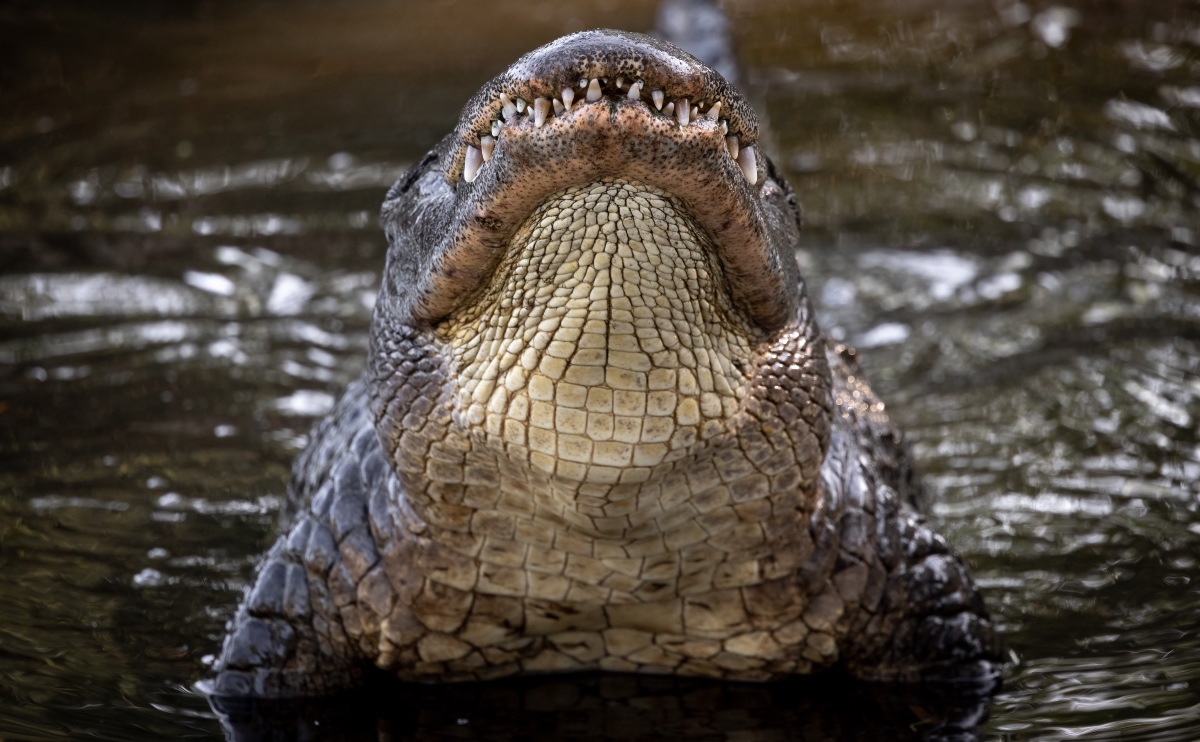
There’s an old saying in Florida: The best way to test if a body of water has a gator in it is to reach down and touch the water. If the water’s wet—there’s probably a gator in it.
It sounds like a joke, but ask any long-time Floridian and they’ll tell you—it’s not far from the truth. Every lake, river, drainage ditch, retention pond, and golf course water hazard in the state could have at least one alligator. Sometimes more.
That reality made national news in May 2025 when a tragic accident at Lake Kissimmee State Park claimed the life of a paddler. The story rattled people both inside and outside Florida, and it raised an important question: should you be worried about alligator attacks?
Let’s break it down: what happened, how common gator attacks really are, and what you can do to stay safe while still enjoying Florida’s outdoors.
What Happened at Lake Kissimmee?
On May 6th, 2025, 61-year-old Cynthia Diekema was paddling a canoe with her husband at Lake Kissimmee State Park—one of Florida’s most scenic, wild, and remote natural areas.
Their canoe passed through shallow water—just about two and a half feet deep—near the mouth of Tiger Creek. Unfortunately, they drifted directly over a large alligator. Startled, the gator thrashed, flipping the canoe and throwing both paddlers into the water.
In the chaos, Cynthia ended up on top of the gator. Officials believe the bite was a defensive reaction—not predatory. Her husband tried to save her, but the animal’s power was overwhelming.
The Florida Fish and Wildlife Conservation Commission (FWC) later captured and euthanized the alligator, which measured nearly 11 feet long.
Several factors may have increased the risk that day:
- Mating season: Gators are more active, territorial, and agitated between April and June.
- Drought conditions: Lower water levels may have forced alligators into shallower areas, increasing chances of surprise encounters.
The incident was a devastating reminder that Florida’s wild beauty comes with very real risks.
Alligator Behavior 101
To understand alligator encounters, you first need to understand the animals themselves.
Florida is home to an estimated 1.3 million alligators. You’ll find them in lakes, rivers, swamps, canals, stormwater ponds, marshes, and even golf courses. If there’s fresh water, chances are there’s a gator nearby.
Here are a few key facts about their behavior:
- Cold-blooded: Alligators are more active in warmer months. They slow down in cooler weather.
- Mating season (April–June): This is when they’re most territorial, vocal, and willing to defend space.
- Nesting season (summer): Female gators guard nests aggressively. Accidentally wandering too close is one of the riskiest scenarios.
- Avoidance instinct: Despite their reputation, most alligators want nothing to do with humans. They will usually slip away quietly if given space.
Trouble starts when people get too close, surprise them, or—worse—feed them. Feeding an alligator is not just illegal, it’s dangerous. Once a gator loses its natural fear of humans, it becomes a problem animal that almost always ends up being killed.
How Rare Are Alligator Attacks?
Let’s get into the numbers, because the fear of gators often outweighs the reality.
According to FWC data:
- Since 1948, there have been 488 unprovoked alligator bites in Florida.
- Of those, 339 were serious injuries.
- Only 29 resulted in fatalities—that’s an average of 0.36 deaths per year.
To put it in perspective:
- Florida averages 6 to 10 serious bites per year out of a population of 23 million residents and 140+ million tourists annually.
- You are statistically more likely to die from:
- A bee or wasp sting (over 60 deaths per year in the U.S.).
- Lightning strikes (Florida is the lightning capital of the U.S.).
- Being crushed by a falling dresser or a tipping vending machine.
In other words, alligator attacks do happen—but they are rare, and fatalities are extremely rare.
Where the danger increases is with pets. Dogs are frequent victims because they resemble natural prey to an alligator. Letting your dog swim in a pond or even walk along the shoreline can end badly.
Safety Tips for Avoiding Alligator Encounters
Alligators are a fact of life in Florida. But you don’t need to live in fear. With a few commonsense rules, you can dramatically reduce your risk:
- Keep your distance. Stay at least 30 feet away. Alligators can lunge quickly over short distances if provoked.
- Only swim in designated areas. Don’t take a dip in random lakes or canals. Stick to marked swimming zones.
- Avoid dawn and dusk. These are peak hours for alligator activity.
- Never feed gators. A fed gator is a dead gator. Feeding them removes their natural fear of humans.
- Be smart when paddling. Avoid thick vegetation where gators hide. If you see one, paddle away calmly. Don’t try to “get closer for the shot.”
- Protect your pets. Keep them on leashes and away from the water’s edge. Even small dogs in strollers are at risk if parked too close to a pond.
These simple steps go a long way toward keeping both you and the animals safe.
What Florida Is Doing to Manage Gators
Florida has a system in place to handle problem gators, and it’s surprisingly organized.
The Statewide Nuisance Alligator Program (SNAP) responds to reports of aggressive or dangerous alligators. If you see a gator acting threateningly or lingering too close to homes, you can call their hotline and a licensed trapper will be dispatched.
FWC also invests in public education—through signs, brochures, safety campaigns, and ranger talks in parks. The goal isn’t to scare people away, but to remind them that Florida’s wild side requires awareness and respect.
Why This Matters
The truth is, Florida’s alligators are not just part of the landscape—they’re a symbol of the state itself. They’ve been here for millions of years, long before Florida had tourists, theme parks, or retirement communities.
The same wetlands that make Florida a paradise for paddling, fishing, and birdwatching are the habitats that alligators call home. You can’t have one without the other.
That’s why the key takeaway is balance. You don’t need to be terrified of gators. But you do need to respect them. Stay alert, follow the rules, and remember: these places are wild, not theme-park engineered.
So, should you be worried about alligator attacks in Florida?
Not really. Concerned? Yes. Prepared? Absolutely. Afraid to go outside? Definitely not.
Statistically, the risk is extremely low. But awareness and common sense matter. Give gators space, don’t swim where you shouldn’t, and keep your pets safe.
Florida’s wild side is part of what makes it so special. The goal isn’t to avoid it—it’s to enjoy it responsibly.
So go ahead and paddle, hike, and explore. Just remember: the water may look calm, but it’s still someone’s home.